
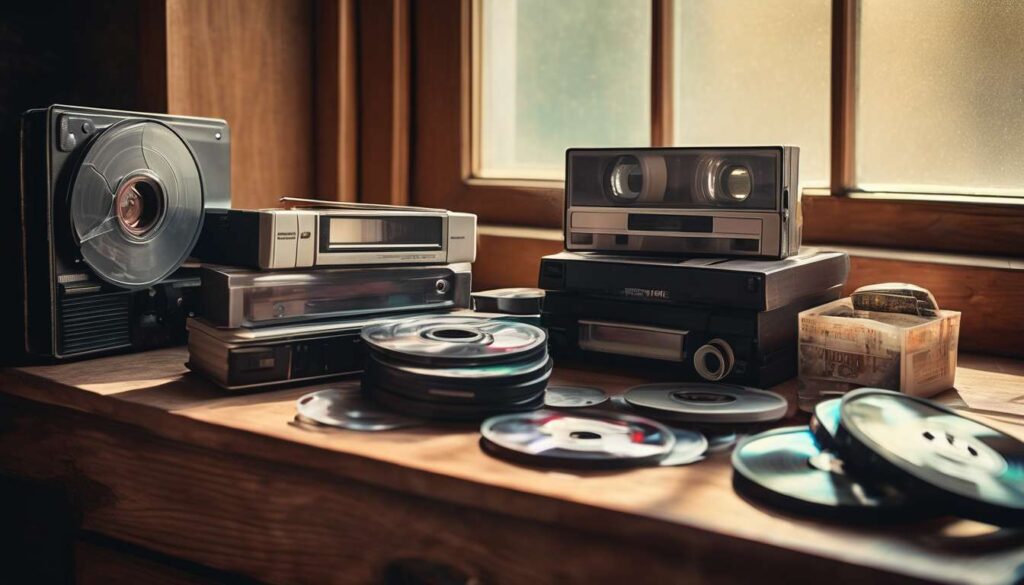
Knowledge of our past often comes from what we choose to save — so how will we, collectively, remember an industry that has been both taboo and technologically pioneering?
Digital preservation of adult movie media does more than archive explicit content; it documents shifts in production, distribution, and societal attitudes.
As archivists, historians, technologists, and consumers, we must grapple with legal, ethical, and technical challenges while acknowledging the medium’s role in driving format innovation and online infrastructures.
Our work uncovers how changing codecs, copyright regimes, platform policies, and privacy concerns affect survivability and access.
We must consider marginalized creators and performers whose stories risk erasure without intentional curation.
- Preservation should prioritize inclusive representation to avoid perpetuating historical silences.
- Consent, agency, and the safety of performers (past and present) must inform acquisition and access policies.
Balancing censorship pressures with principles of historical integrity requires concrete strategies.
- Develop metadata standards that capture context, production conditions, and rights information.
- Implement secure storage and redundancy to protect fragile or at-risk materials.
- Provide context-rich descriptions to situate works historically and ethically.
By interrogating what we preserve and why, we can ensure a nuanced record that informs future scholarship, policy, and public understanding of this complex cultural domain.
Historical Trajectories
We trace how adult movie media have shifted across formats, distribution channels, and cultural attitudes from early film reels to today’s streaming platforms.
We remember the communal work of collectors, archivists, and creators who’ve safeguarded materials as technologies changed, and we acknowledge that born-digital preservation now demands new practices alongside analogue care.
We commit to shared metadata standards so items are discoverable, contextualized, and accessible to those who belong to our research and viewing communities.
We recognize that ethical rights management has to balance creators’, distributors’, and subjects’ interests while enabling scholarly access and community memory.
We confront past neglect and stigma by documenting provenance, censorship histories, and distribution pathways without sensationalizing individuals.
We collaborate across institutions to pool resources, adopt interoperable cataloging, and train volunteers in respectful handling.
We want everyone who contributes or seeks these records to feel included, protected, and confident that preservation serves collective knowledge, cultural continuity, and responsible stewardship of adult media’s complex past.
Technological Milestones
We’ll map the key technological milestones—from celluloid and VHS to DVD, digital files, and streaming architectures—that reshaped how adult movies were produced, distributed, stored, and preserved.
We recognize tactile reels and tapes gave way to compact discs and file formats, and we’ll trace how each shift created new preservation demands we face together.
We embrace born-digital preservation as a core practice, since many contemporary works never existed in analog form and need stewardship from the start.
We adopt metadata standards to ensure discoverability and contextual integrity across platforms, so contributors and audiences feel seen and connected.
We implement robust rights management workflows to respect creators, performers, and institutions while maintaining access for research and cultural memory.
We’re collaborative: archivists, technologists, and community members align on formats, checksums, migration plans, and storage diversity.
By acknowledging clear technical milestones and shared responsibilities, we build inclusive preservation strategies that keep this media accessible, intelligible, and cared for across generations.
Legal and Ethical Frameworks
We’ll navigate the complex legal and ethical landscape governing adult film preservation to protect creators’ rights, ensure performer consent, and uphold community standards while keeping materials accessible for research and cultural memory.
We recognize that stewardship means responsibility: we’ll prioritize consent records, age verification, and clear rights management so performers and creators stay respected and empowered.
We’ll advocate policies that balance access with harm reduction, creating safe spaces where archivists, creators, and community members belong and collaborate.
For born-digital preservation, we’ll adopt secure workflows that prevent unauthorized distribution while enabling long-term retention.
We’ll align with legal frameworks—copyright, privacy, and data protection—while pushing for nuanced exceptions that serve scholarship without exploiting subjects.
We’ll implement transparent procedures for takedown, dispute resolution, and ethical review, and we’ll train teams to handle sensitive content with care.
By coordinating with rights holders and community stakeholders, we’ll build accountable, inclusive preservation practices that honor dignity, protect legal interests, and preserve cultural memory responsibly.
Metadata and Documentation
We’ll create clear, consistent metadata and documentation practices that capture provenance, consent records, technical specs, and contextual information to make adult film collections discoverable, accountable, and usable over time.
We’ll adopt metadata standards that suit mixed formats, ensuring born-digital preservation entries sit alongside digitized legacy items with equal care.
We’ll record who created or contributed to material, when consent was given, and any usage restrictions so community members feel respected and secure.
We’ll standardize technical documentation—file formats, codecs, resolution, checksums—so materials remain accessible and verifiable.
We’ll link descriptive metadata to rights management statements, licensing terms, and contributor agreements to support ethical access and stewardship.
We’ll build shared templates and training so everyone involved can contribute accurate records, fostering inclusion and trust.
We’ll routinely audit metadata for completeness and clarity, updating records as contexts change.
By centering transparent, interoperable documentation, we’ll keep collections usable, accountable, and meaningful to both creators and audiences over the long term.
Preservation Infrastructure
We will build resilient, scalable preservation infrastructure.
Key components:
- Storage, redundancy, monitoring, and access systems designed to protect adult film media.
- Enforcement of consent, privacy, and ethical access controls throughout the system.
We will design networks and repositories that embrace born-digital preservation from ingest through long-term stewardship.
- Ensure files remain authentic, retrievable, and context-rich.
- Include provenance capture and chain-of-custody records.
We will adopt clear metadata standards.
- Describe content, provenance, technical requirements, and access conditions.
- Make collaboration and discovery simple for the community.
We will implement layered storage with geographic redundancy.
- Use integrity checks and automated migration paths to prevent bit rot and format obsolescence.
- Plan for regular fixity checking and checksum validation.
We will integrate rights management into preservation workflows.
- Track and enforce permissions, embargoes, and licensing without friction.
- Ensure access reflects documented consent and legal/ethical constraints.
We will deploy monitoring dashboards and alerting.
- Catch system failures early.
- Document procedures so any member of the network can respond consistently.
We will prioritize interoperability, open APIs, and shared governance.
- Create a trusted ecosystem where members contribute resources, expertise, and mutual respect.
- Ensure preserved materials are secure, usable, and handled according to collective ethical commitments.
Performer Rights and Safety
We’ll ensure performers’ rights, consent, and safety are central to every preservation decision.
We’ll build processes that let performers control access, correct records, and request removals.
We’re committed to creating a welcoming, collaborative environment where performers feel respected and heard throughout born-digital preservation workflows.
We’ll adopt clear metadata standards that record consent status, age verification, and contractual terms so provenance and permissions travel with each file.
We’ll implement rights management tools that let performers set granular controls and provide audit trails.
- Provide interfaces that let performers:
- Set access levels and permissions.
- Review and update consent status.
- Submit corrections or takedown requests.
We’ll provide straightforward interfaces for submitting corrections or takedown requests.
We’ll train staff in trauma-informed practices and confidentiality, and we’ll encrypt sensitive data to minimize risk.
- Staff training will include:
- Trauma-informed communication.
- Confidential handling of sensitive content.
- Secure data practices and encryption standards.
We’ll also establish review committees including performer representatives to ensure policies remain responsive and equitable.
By centering consent, transparency, and collective governance, we’ll build a preservation program that protects careers, dignity, and safety while maintaining the integrity of the historical record.
Access and Curation Policies
We’ll define clear, tiered access levels and curation criteria that balance researcher use, performer privacy, and legal obligations.
We create policies that let our community contribute and trust the archive:
- Public exhibits for historical context.
- Restricted research access for scholars.
- Tightly controlled internal tiers when consent or sensitive content is involved.
We prioritize born-digital preservation workflows that capture original file integrity and provenance.
- Enforce consistent metadata standards so items are discoverable without exposing unnecessary personal details.
- Preserve checksums, original file formats, and provenance records.
We handle rights management proactively.
- Document licenses, consent forms, and takedown mechanisms.
- Train staff and volunteers to apply these rules uniformly.
We encourage collaborative governance, inviting performers, researchers, and community members to review access decisions and curation priorities.
We regularly audit access logs, update criteria based on feedback, and publish transparent reports so everyone feels included and protected.
Our approach keeps materials usable for study while honoring privacy and legal responsibilities.
Future Research Directions
We’ll prioritize research into balancing long-term access, ethical privacy protections, and sustainable technical practices for adult film archives.
We’ll explore born-digital preservation strategies that respect contributors and communities, ensuring formats remain readable without exposing sensitive personal data.
We’ll develop interoperable metadata standards that capture provenance, consent status, and contextual information so collaborators feel seen and secure.
We’ll study rights management frameworks that are flexible, transparent, and enforceable across jurisdictions, letting creators control use while researchers and community members retain responsible access.
We’ll run participatory pilot projects with archivists, technologists, rights holders, and community advocates to iterate practices together.
We’ll evaluate cost-effective storage models, migration plans, and integrity checks with environmental and financial sustainability in mind.
We’ll publish clear guidance, tools, and case studies to foster shared understanding and capacity-building.
By centering ethical safeguards alongside technical rigor, we’ll build a field where belonging, accountability, and access advance in tandem, creating durable, respectful preservation pathways for adult movie media.
How can private individuals legally create personal digital backups of adult films they own without risking copyright infringement or violating terms of service?
Short answer: You can reduce legal and terms-of-service risk by following a few conservative, rights-respecting practices when making a personal backup of adult films you legally own. These practices focus on limiting use, avoiding distribution, and honoring DRM and platform rules.
Key principles to follow
1. Keep backups strictly for personal use.
- Make copies only to replace or preserve access to material you legally purchased or own.
- Do not make copies intended for sharing, public posting, uploading to cloud services accessible by others, or selling.
2. Avoid any form of distribution.
- Do not share backup files with friends, forums, file-sharing services, or torrent networks.
- Do not post clips, screenshots, or links that would enable others to access the content.
3. Respect DRM and platform terms.
- Do not attempt to circumvent or remove DRM. Circumventing technological protection measures is illegal in many places even for personal-use purposes.
- Follow platform/retailer terms of service. Some services expressly forbid copying or exporting content; honoring these rules avoids contract/TOS breach issues.
4. Delete backups if you no longer own the media.
- If you sell, return, or otherwise transfer ownership of the original disc, physical item, or account access, delete personal backups promptly.
5. When uncertain, get permission or legal advice.
- If you’re unsure whether a specific action is allowed, ask the rights holder (publisher/distributor) for permission or consult a qualified attorney familiar with copyright and digital-rights law in your jurisdiction.
Practical, fair-use-friendly steps
- Confirm you lawfully purchased or otherwise legitimately own access to the film.
- Use only officially permitted methods provided by the service or platform (for example, any “download for offline” feature that the provider supplies).
- Avoid use of third-party tools that remove DRM or enable redistribution.
- Store backups locally and securely (encrypted if you prefer privacy), and do not set sharing permissions that would let others access the files.
- Keep backups only as long as you retain ownership or legal access rights.
Final note: Laws and platform terms vary by country and service. These guidelines aim to minimize legal and TOS risk but are not legal advice. When in doubt, obtain explicit permission from the rights holder or consult an attorney.
What are best practices for anonymizing any personal data in user-contributed collections of adult media to protect contributors’ privacy?
Goal: Protect contributors’ privacy in user-contributed adult media collections.
Remove embedded metadata and identifiers.
- Strip all metadata from uploaded files (EXIF, IPTC, XMP) before storage or publication.
- Scrub filenames and embedded timestamps (including GPS/timecodes burned into video frames) during ingestion.
- Remove or obfuscate any visible overlays or watermarks that could identify a contributor.
Replace direct identifiers with pseudonymous references.
- Hash internal IDs using a strong keyed hash (HMAC with a site-held secret) so IDs are non-guessable and cannot be trivially linked across systems.
- Replace real names with generated pseudonyms; store mappings separately and encrypted only when necessary.
- Avoid storing unnecessary personal attributes (birthdates, addresses, social links) in the media record.
Minimize and protect contact information.
- Require only minimal contact info for verification and consent processes.
- Store contact details in a separate encrypted repository (use envelope encryption or a secrets manager) with tighter access controls than media storage.
- Limit retention of contact info to the minimum period needed and delete promptly after it is no longer required.
Enforce strict access controls and auditing.
- Apply the principle of least privilege: grant media and identity access only to roles that need it.
- Use multi-factor authentication and role-based access control for staff and admin interfaces.
- Log all access to media and identity mappings; retain logs for an appropriate, consented period and monitor for anomalies.
Obtain and manage consent and retention policies.
- Require explicit, documented consent for collection, storage, and any publication or sharing of media.
- Make retention periods clear to contributors and implement automatic purging according to those policies.
- Provide a simple, verifiable procedure for contributors to revoke consent and request deletion.
Offer secure submission and deletion channels.
- Provide end-to-end encrypted submission options (HTTPS + TLS, or client-side encryption) to prevent interception during upload.
- Verify and confirm deletion requests securely (e.g., authenticated account action or secure token) and remove media, metadata, and any identity mappings from primary and backup stores per the deletion policy.
- Consider secure deletion techniques appropriate to storage medium (zeroing, crypto-shredding of encryption keys).
Additional safeguards and best practices.
- Perform automated and manual reviews to detect remaining identifiers (faces, voice, distinctive tattoos) and offer redaction tools (face blurring, audio alteration) as part of the workflow.
- Use privacy-preserving analytics and avoid linking contributor records across unrelated services.
- Regularly audit security controls, run vulnerability scans, and update procedures to reflect legal and technical changes.
- Keep contributors informed about how their data is processed and their rights, and provide easy contact/support for privacy questions.
If you want, I can convert this into a checklist, an implementation plan with prioritized steps, or specific technical commands/tools for metadata stripping, hashing, encryption, and secure deletion.
Are there recommended open-source tools or affordable consumer-grade hardware setups for home archiving of aging physical adult media (VHS, DVDs) to digital formats?
Goal: Reliable, affordable ways to digitize aging VHS and DVDs at home.
Recommended software (open-source):
- HandBrake — DVD ripping and encoding to modern formats.
- FFmpeg — powerful command-line ripping, transcoding, and batch processing.
- OBS Studio — capture from analog sources when paired with a capture device.
- VirtualDub — lightweight capture and simple filtering for analog video.
Recommended hardware:
- USB A/V capture device — affordable easyCAP-style alternatives for analog video capture (composite/S-video + stereo audio).
- VCR with clean heads — ensure the VCR is serviced and the heads cleaned for best picture quality when capturing VHS.
- Quality DVD drive — a reliable optical drive for reading scratched or aging discs.
Workflow and preservation practices:
- Test captures — capture short test clips to verify color, sync, frame rate, and audio levels before committing to full transfers.
- Create lossless masters — store uncompressed or losslessly compressed masters (e.g., FFV1 in Matroska, or high-bitrate lossless formats) as archival originals.
- Make access copies — transcode from the masters to user-friendly formats (e.g., H.264 or H.265 MP4/MKV) for everyday viewing.
- Store checksums — generate and keep checksums (MD5/SHA256) for masters and important files to detect bit-rot or corruption.
- Keep metadata — note capture settings, source device, date, and any cleaning/repair actions to maintain provenance.
Key practices to improve results:
- Use S-video when available to reduce composite chroma artifacts.
- Adjust capture settings to match source frame rate and interlacing (deinterlace or preserve fields as appropriate).
- Clean and test the VCR and tapes; consider tape baking only if necessary and handled by experienced services.
- Keep multiple backups (local + offsite) and periodically verify checksums.
If you want, I can provide:
- Step-by-step capture commands for FFmpeg and HandBrake.
- Recommended capture device models and links to comparisons.
- Detailed settings for creating lossless masters (container, codec, bitrate) and access copies.
Conclusion
You’ve seen how adult film media has evolved across formats, law, and technology, and why preserving it matters for history, culture, and rights.
You’ll need clear metadata, robust infrastructure, and ethical access rules to protect performers and researchers alike.
As you build preservation programs, prioritize consent, legal compliance, and transparent curation while investing in standards and research.
Doing so ensures these materials remain accessible, contextualized, and responsibly stewarded for future study and understanding.