
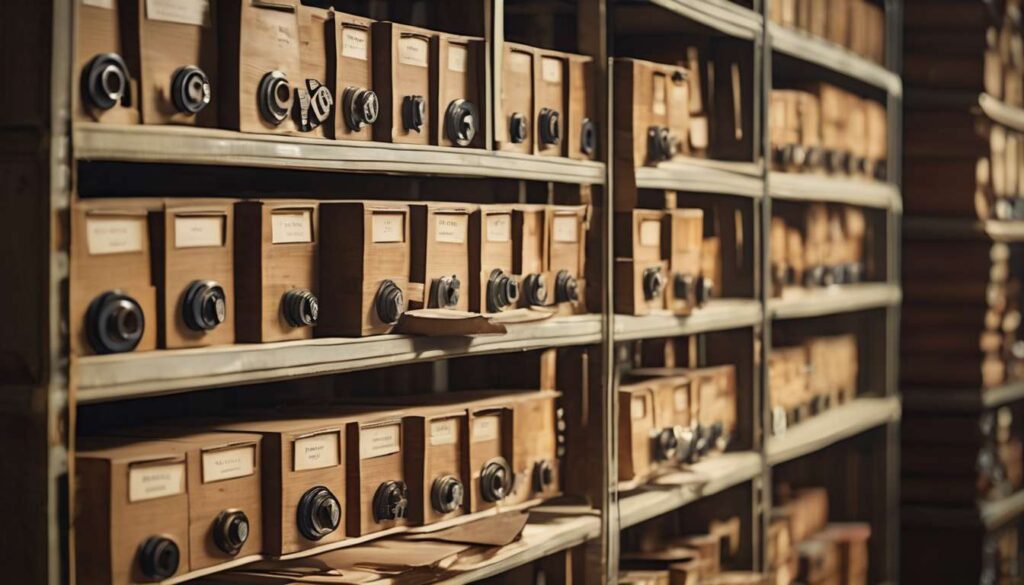
Rather than relegating adult film production to the margins of cultural memory, we treat its archives as business records deserving rigorous preservation.
We contrast glossy public perceptions with the complex realities of a regulated, capital-intensive industry that has navigated technology shifts, legal battles, and evolving distribution models.
We trace payroll ledgers alongside performer contracts, studio memos alongside marketing plans, showing how commercial decision-making shaped creative outcomes and vice versa.
By preserving corporate correspondence, tax filings, and distribution logs, we reconstruct entrepreneurial strategies, risk management practices, and revenue models that paralleled mainstream media firms.
We argue that these materials offer indispensable insights into:
- labor relations
- intellectual property innovation
- the economics of adult entertainment
Our approach reframes adult film archives not as titillating curiosities but as business history repositories that illuminate broader patterns in media industrialization.
Through responsible stewardship, we ensure these records inform scholarship, policymaking, and public understanding with nuance and accuracy.
Industry Context
To preserve adult film industry history effectively, we must analyze how structures, economics, and cultural forces determine what is recorded and what is lost.
Production companies, distributors, performers, and technicians influence archival outcomes.
- Production companies often control master materials and distribution records.
- Distributors determine which titles persist in circulation.
- Performers and technicians decide what personal materials to keep or destroy.
- These actors’ priorities shape whether material enters institutional archives or remains ephemeral.
Records preservation practices vary by budget and intent.
- Some entities maintain meticulous contracts and production logs that are vital for provenance, credit, and legal clarity.
- Others discard materials to reduce liability, avoid stigma, or because of limited resources.
- Understanding these divergent practices helps archivists target the most at-risk documentation.
Access and ethics are inseparable in archival work.
- Decisions about who can consult collections, under what conditions, and with what restrictions affect research and community memory.
- Privacy, consent, and the potential for harm must guide access policies.
- Ethical frameworks should balance scholarly needs with performers’ rights and dignity.
Inclusive policies must recognize marginalized workers and informal networks.
- Many contributors operate outside formal companies and thus leave fewer institutional traces.
- Archival outreach should actively seek materials from escorting networks, independent creators, and support staff.
- Inclusion expands the historical record and prevents erasure of vulnerable communities.
Advocate for sustainable preservation strategies that respect creators’ rights and audience curiosity.
- Sustainable models include community archives, cooperative stewardship, and partnerships with institutions that understand the field’s specific needs.
- Clear rights frameworks and consent protocols protect creators while enabling legitimate research and access.
- Transparency builds trust between archivists, creators, and researchers.
Map economic incentives, legal constraints, and cultural attitudes to design better systems.
- Identify incentives that encourage retention (e.g., residuals, reputation, reuse).
- Document legal barriers (e.g., obscenity laws, contract confidentiality, platform takedowns).
- Record cultural factors (e.g., stigma, generational memory practices) that affect preservation.
Design archival systems that foster trust, broaden participation, and ensure survival of professional history.
- Implement outreach and education to build relationships with industry participants.
- Create access controls and consent-driven workflows that respect privacy.
- Secure funding models for long-term storage, digitization, and curation.
By combining ethical access, inclusive collecting, legal awareness, and sustainable funding, we can significantly improve the preservation of adult film industry history for research, community connection, and cultural understanding.
Archival Value
Any archival program must clearly define what types of materials we value and why. These choices determine whose stories get preserved and which aspects of industry history remain visible.
We believe adult film archives should reflect the full diversity of participants and business practices, and we commit to records preservation that centers dignity and context. We’ll prioritize items that illuminate labor, entrepreneurship, regulation, and community responses, while being mindful of privacy and consent.
Access and ethics are intertwined. Open access can empower researchers and community members, but it can also expose vulnerable people. We’ll adopt clear policies that balance transparency with protections, providing tiered access where needed.
We will invite collaborators so decisions aren’t made top-down. Partners will include:
- Performers
- Producers
- Scholars
- Archivists
We will document provenance, consent histories, and restrictions. This documentation will help future users understand:
- Why materials were collected.
- How materials may be used.
- Any ethical or legal limitations on access.
Our goal: create collections that welcome inquiry, honor lived experience, and sustain a sense of belonging for everyone connected to this industry.
Types of Records
We collect a broad range of materials—films, photographs, contracts, correspondence, financial records, promotional items, and oral histories—that together document creative work, labor practices, business structures, and community life.
We organize materials into clear series so researchers and community members can find what they need:
- Production reels and masters
- Stills and behind-the-scenes images
- Performer contracts
- Payroll ledgers
- Distribution agreements
- Marketing collateral
- Fan mail
- Recorded interviews with technicians and performers
In our adult film archives, preserving context matters as much as preserving artifacts.
- Provenance notes travel with items.
- Rights statements travel with items.
We balance records preservation with thoughtful access and ethics.
- We control sensitive personal data.
- We respect privacy requests.
- We create access policies that welcome community stewardship while meeting legal obligations.
We describe items transparently and invite contributions.
- We provide inclusive finding aids.
- We encourage participation so people who seek belonging in this history can engage confidently and responsibly with the material.
Preservation Challenges
Many preservation challenges stem from fragile media formats, incomplete documentation, and competing privacy and legal constraints.
We must often prioritize what we can save and share because physical tapes, photos, and born-digital files are at risk of degradation or format obsolescence. Proactive stabilization of materials is therefore essential.
We build community-centered workflows that balance records preservation with sensitivity to contributors.
- This ensures everyone feels included in the stewardship process.
- It supports respectful handling of sensitive materials and contributor agency.
We confront gaps in provenance and inconsistent metadata by collaborating with creators, performers, and industry staff.
- Working with stakeholders helps reconstruct context and improve discoverability.
- Collaborative documentation reduces the risk of misattribution and loss of contextual meaning.
Limited funding and storage resources make triage decisions inevitable.
- We define selection priorities guided by shared values.
- We document triage rationales to maintain transparency and institutional memory.
Throughout, we prioritize transparent policies around access and ethics and invite stakeholders into decision-making.
- Stakeholder involvement helps preservation reflect collective responsibility.
- Transparent policies support responsible research, memory work, and community trust.
Legal and Ethical Issues
We must navigate complex legal frameworks and ethical obligations that protect performers’ rights, honor contributor consent, and limit risky access to sensitive materials.
Adult film archives carry unique responsibilities.
- We enforce consent documentation, age verification records, and clear provenance to support records preservation while respecting privacy.
- We build policies with stakeholders so community members feel included and heard, balancing transparency and protection.
We create tiered access systems that reflect access and ethics principles.
- Tiered systems allow researchers appropriate use while preventing exploitation.
- Access levels should be clearly documented, justified, and reviewed.
We regularly review retention schedules, redaction protocols, and requests for use.
- Reviews should include consultation with legal counsel and performer representatives.
- Retention and redaction decisions must be defensible, consistent, and sensitive to harm reduction.
We train staff to handle sensitive content compassionately and to spot potential harms.
- Training should include recognition of power imbalances, privacy risks, and culturally competent practices.
- Staff should know escalation paths for legal, ethical, or safety concerns.
We commit to equitable decision-making to prevent erasure of marginalized contributors.
- Ensure policies do not disproportionately silence or remove records of marginalized people in pursuit of legal safety.
- Include diverse stakeholders in policy development and review.
By centering respect, consent, and accountability, we protect both the historical record and the people whose work made it, fostering a trusting archival community.
Cataloging Methods
We organize materials with standardized metadata schemas and controlled vocabularies so researchers can discover, interpret, and contextualize holdings reliably.
We balance granular description with respectful language in our cataloging methods to honor people represented while making adult film archives usable.
We apply consistent fields for creators, production companies, dates, formats, and rights to support records preservation and clear provenance.
We tag sensitive content and apply layered access controls so communities and researchers understand restrictions and ethical considerations before requesting materials.
We document acquisition context, consent statements when available, and any redactions to maintain transparency about access and ethics decisions.
We use interoperable standards and community-informed vocabularies to ensure compatibility across institutions. Examples of standards and practices we use:
- Dublin Core
- EAD (Encoded Archival Description)
- PREMIS (Preservation Metadata)
- Community-informed controlled vocabularies and subject headings
We welcome collaboration with stakeholders — performers, historians, rights holders — in cataloging choices so the archive reflects shared values.
By combining technical rigor with inclusive practice, we keep collections discoverable, accountable, and safe for those who rely on them.
Research Applications
We show researchers how collections can illuminate cultural, legal, labor, and technological histories by linking rich metadata, oral histories, and contextual materials to reproducible research methods.
We guide scholars to adult film archives as rigorous repositories where records preservation supports longitudinal studies of labor practices, contract evolution, and technology adoption.
We frame methods that combine qualitative interviews with quantitative metadata analysis so teams can trace networks of production, distribution, and regulation.
We prioritize clear protocols for consent, anonymization, and community review to align access and ethics with researchers’ responsibilities to contributors and subjects.
Key ethical practices:
- Establish informed consent procedures that are specific to archival use and potential public dissemination.
- Implement robust anonymization techniques when necessary to protect identities and vulnerable contributors.
- Build community review mechanisms that allow contributors — performers, technicians, distributors — to review uses of their materials.
We encourage collaborative projects that invite performers, technicians, and distributors into research design, strengthening trust and making findings more robust.
Collaborative design steps:
- Convene stakeholder advisory groups at project outset.
- Co-develop research questions, access rules, and dissemination plans.
- Share interim findings and incorporate community feedback throughout the project.
We document provenance, custodial decisions, and appraisal rationales so research is reproducible and accountable.
Documentation practices:
- Record acquisition context, chain of custody, and any restrictions or donor statements.
- Keep detailed appraisal notes explaining inclusion/exclusion choices and preservation actions.
- Link documentation to the metadata and analytical workflows used in research to enable reproducibility.
By centering inclusive practices and transparent methods, we help scholars produce work that honors lived experience, advances understanding, and ensures that records preservation in adult film archives becomes a shared, ethical foundation for future inquiry.
Public Access Strategies
Public access strategies will balance researcher needs, contributor privacy, and legal constraints while promoting responsible discovery and use.
We will center adult film archives as community resources by providing clear finding aids, curated digital exhibitions, and tiered access levels that reflect consent and sensitivity.
Tiered access will include:
- Public access for non-sensitive, consented materials.
- Registered-researcher access for materials requiring accountability and monitoring.
- Restricted or on-site-only access for high-sensitivity or non-consented materials.
- Embargoed material with time-limited restrictions.
We will document records preservation workflows so users understand provenance and authenticity, and we will provide transparent policies about redaction, embargoes, and restricted materials.
Access procedures will be straightforward and supported by trained staff mediators who help researchers navigate access and ethics, fostering trust and belonging.
We will adopt standardized metadata and secure digitization to increase discoverability while minimizing exposure of identifying details.
Collaboration with contributors and stakeholders is essential.
- Co-create access terms with contributors.
- Regularly review access agreements to reflect changing laws and community expectations.
We will offer educational materials that contextualize materials ethically and historically to support responsible use and interpretation.
Through these measures, adult film archives will remain responsible, usable, and respectful of the people whose records we preserve.
How do archivists verify the authenticity of dated materials (e.g., scripts, contracts) when original timestamps may be absent or tampered with?
Goal: Build a converging body of evidence that supports reliable dating and authenticity.
Cross-check provenance.
- Trace ownership and custody history.
- Verify acquisition records, bills of sale, estate inventories, and institutional accession logs.
- Look for gaps or inconsistencies that require further investigation.
Compare handwriting and paper with known samples.
- Examine handwriting features (letterforms, slant, ligatures, abbreviations).
- Compare paper type, watermark, chain lines, and manufacturing characteristics with dated exemplars.
Analyze inks and materials scientifically.
- Use techniques such as Raman spectroscopy, X-ray fluorescence (XRF), chromatography, and microscopy.
- Identify ink composition, pigments, binders, and paper fibers to narrow date ranges.
Consult contemporaneous documentary evidence.
- Search letters, receipts, diaries, ledgers, and newspapers from the same period for references or corroborating details.
- Check related file metadata (digital timestamps, modification histories) where available.
Digitize and record chain-of-custody.
- Create high-quality digital images and a secure, timestamped record of handling and storage.
- Maintain logs noting every transfer, examination, and alteration to preserve provenance integrity.
Involve specialists for forensic testing when needed.
- Engage archivists, conservators, forensic document examiners, chemists, and historians as appropriate.
- Combine specialist reports to assess consistency and rule out anachronisms or tampering.
Synthesize findings to reach a conclusion.
- Weigh all lines of evidence for consistency and independent support.
- Identify and explain any remaining uncertainties or conflicting data.
- Present a reasoned judgment on date and authenticity, noting confidence levels and recommended further steps if necessary.
What funding opportunities or grants are available specifically for archiving adult film industry materials, and how can small archives apply?
Funding sources to pursue
We can pursue grants from LGBTQ+, cultural heritage, and independent media funders (e.g., NEA, state humanities councils, foundation programs) and special collections funds that accept sensitive topics.
We’ll seek donor circles, crowdfunding, and collaborations with universities to access institutional grants.
When applying, we’ll highlight:
- Research value
- Community impact
- Clear access policies
- Ethical handling
- Preservation plans
We’ll also:
- Request letters of support
- Prepare realistic budgets
How do archives handle requests from former performers or producers seeking to remove or restrict access to materials that include them?
We handle requests from former performers or producers with care and respect.
We listen to their concerns and explain our policies.
We review applicable laws, donor agreements, and privacy or consent documentation.
We assess potential harms and public interest.
We consider remedies such as:
- Redaction
- Restricted access
- Embargoes
- Metadata changes
We document decisions.
When possible, we seek collaborative solutions and offer referrals to legal or support resources to help resolve disputes.
Conclusion
You’ve seen how archiving adult movie production preserves business history, safeguards cultural context, and supports scholarship.
By collecting contracts, logs, marketing, and media, you protect evidence of industry practices while navigating preservation challenges, legal complexities, and ethical concerns.
Using clear cataloging and access strategies, you’ll balance researcher needs with privacy and rights.
Ultimately, your archival work ensures this often-overlooked sector contributes responsibly to the historical record and public understanding.